

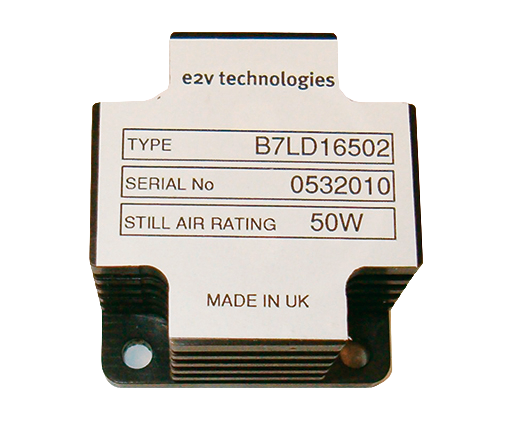
Teledyne e2v + AEP Pacific

AEP Pacific is New Zealand and Australia’s primary partner with Teledyne e2v, backed by a partnership of over 25 years. We provide local stock to make sure you receive your replacement parts on time when you need them.

LINAC Magnetrons & Thyratrons

The magnetrons and thyratrons from e2v technologies are ‘the tube of choice’ for linac manufacturers all over the world, their devices are found in over 90% of the world’s radiotherapy systems. The original equipment manufacturers only approve e2v products for service replacements.


Your LINAC machine needs to stay up and running. When you require parts, time is of the essence. To ensure the integrity of the machine, you need original parts with full manufacturer support and warranty.


To fulfil these needs, AEP Linac and e2v technologies formed a strategic partnership for the sales and after sales of (medical) LINAC magnetrons and thyratrons. For over 25 years we have helped our customers to reduce their maintenance costs and downtime by providing fast response and shipping, competitive pricing and full factory support and warranty.

Radar Applications

When your mission is critical, you need reliable parts fast. We understand that companies cannot afford downtime and therefore flexibility is paramount. At AEP Pacific, we always keep components in stock for critical applications like marine radar to make sure you get the parts you need, when you need them.

FAQ

Magnetron type number cross-reference table

AEP confirms the position of the generic type numbers of linac magnetron versus the type numbers used by the linac manufacturers as follows:

All magnetrons supplied by AEP are fully form fit and functional replacements for the same types mentioned by the linac manufactures as shown in the cross-reference table by magnetron type number.

e2v Technologies and AEP confirm the M5028 magnetron can be used in the Elekta SL and Sli machines. The M5028 is fully form fit and function replacement for the MG6363 magnetron.

e2v Technologies and AEP confirm the MG6028 precision tuned magnetron can be used in Elekta Sli machines. The MG6028 is fully form fit and function replacement for the MG6370 magnetron.

For the Varian machines which are normally fitted with a magnetron type MG6165, AEP confirms the MG5193 is fully form fit and function replacement for the MG6165 magnetron.

AEP confirms the MG5193 can be used in the new Siemens Primus machines which are normally fitted with a magnetron type MG6250. The MG5193 is fully form fit and function replacement for the MG6250 magnetron.

In regards to the supply of the M5167 magnetron we can inform you that Marconi has ceased production of this type and replaced it with the MG5193. This tube is form fit and function replacement. What is more, the MG5193 has a higher average power capability than its predecessor.

e2v Technologies and AEP advise its customers of the discontinuation of magnetron products MG5349 and MG5349M. These products have been superseded by magnetron MG6090, which e2v and AEP consider as a direct replacement that includes performance enhancements.

Performance enhancements – MG6090 series

The MG6090 series of magnetrons have been developed to replace the MG5349 series of products. Designed specifically for linear accelerator use, these new magnetrons are RoHS compliant and robust. For transport considerations, the MG6090 magnetron is able to withstand a shock of up to 101G in magnitude; three times that of the MG5349 series predecessors. In addition, high voltage leads and connectors have been upgraded to minimize stray microwave radiation from the product during operation.

The MG6090 series magnetrons are not supplied with HT cable assemblies, as their designs tend to be specific to each system configuration. These cables have OEM specific part numbers:

– MA6191 (Varian Medical Systems)

– MA6291 (Siemens Medical Systems)

– MAXXX To be advised (Mitsubishi)

Can you use the thyratrons CX1154 or CX1154L in SL Series Linacs?

The CX1154L is recommended for old SL75-20 machines: machine numbers < 5001. These don’t have a critical timing.

CX1154L is recommended for use in all machines WITHOUT a slitted flight tube, which are machines with a serial number > 5361. The CX1154L is NOT recommended for SL15/18/20/25which still have the slitted flight tube fitted: these are machines with a serial number from 5001 to 5361 inclusive.

In machines that have had the SLITLESS flight tube upgrade the CX1154L thyratron may be used as replacement and will fit into these machines.

The CX1154L has been fitted by Elekta into all new machines made after end of 1999. Todays Sli’s machines are all standard fitted with a CX1154L thyratron.

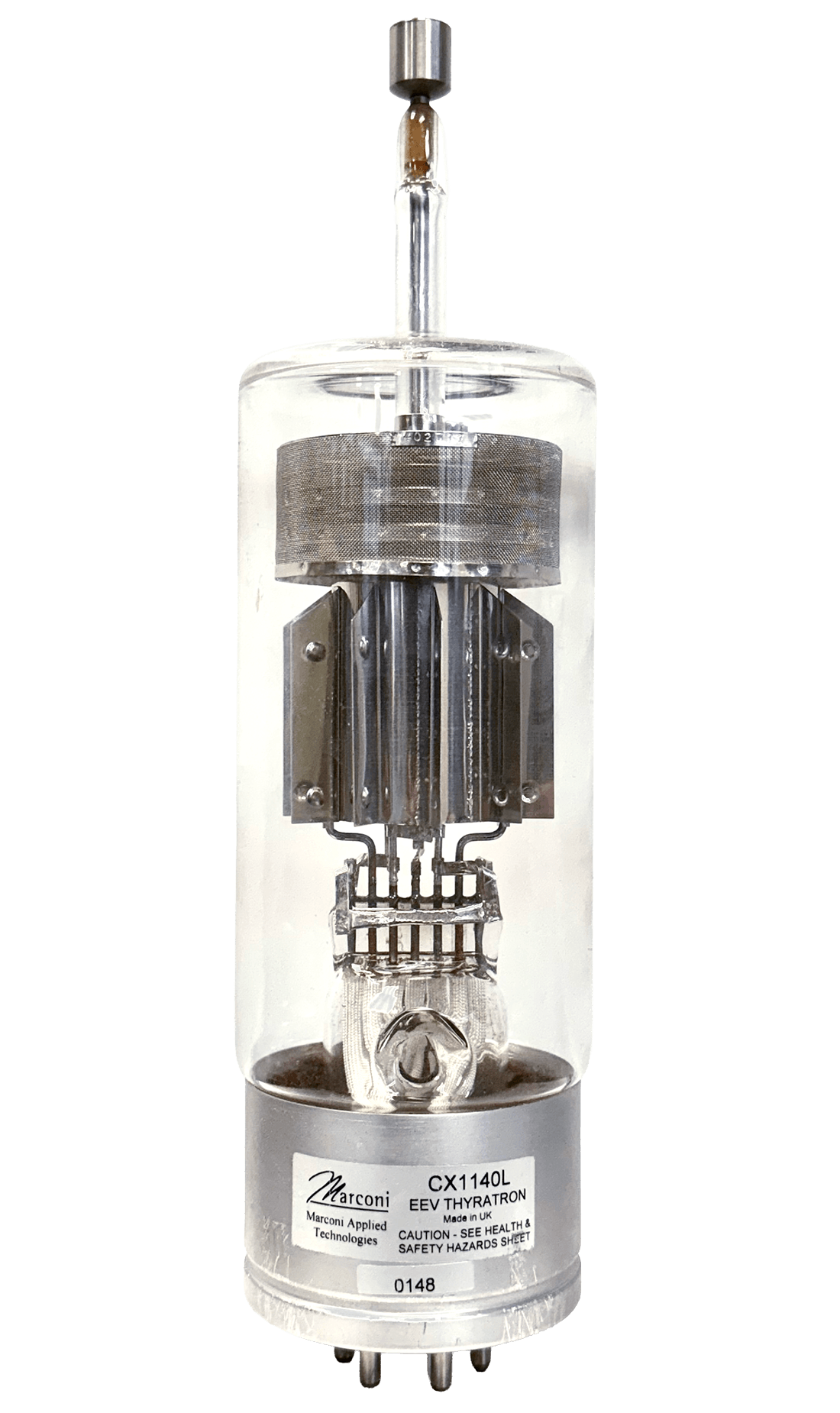
The only difference between the CX1140LD and CX1140L is that the CX1140LD is filled withdeuterium and the CX1140L is filled with hydrogen. Deuterium gives a higher voltage hold-off, with the same filling pressure, than hydrogen. The CX1140LD, therefore, is completely interchangeable with the CX1140L used today for newly built LINAC and spare parts.

Recently e2v technologies decided to further improve the design of the CX1140LD. As a result of these changes e2v decided to change the type number of the CX1140LD thyratron into type number CX1140LE. The most important change to the thyratron has been to improve the metal mesh enclosing the high voltage electrode. This to improve the lifetime expectancy of the thyratron. It’s superior characteristics and performances have been confirmed by a extensive test program.

Recently e2v technologies decided to further improve the design of the 8503AF dqueing thyratron. As a result of these changes e2v decided to change the type number of the 8503AF dqueing thyratron into type number 8503AG. There have been a number of changes to improve the thyratron:

  • The 8503AG incorporates the same metal mesh as used on the CX1140LE
  • Design of the cathode heater has been improved to reduce mechanical stress within the heater
  • Thermal characteristics of the heater are unchanged and there will be no effect on operation of the thyratron in your radiotherapy equipment.
  • The most obvious change has been to introduce a red adhesive between the metal base cap and the glass thyratron body

It’s superior characteristics and performances have been confirmed by a extensive test program.

In collaboration with Elekta there is a small design change to the grid 2 structure and the CX1154L is now filled with hydrogen, not deuterium. This results in a faster recovery time and therefore the effect is that the new design CX1154L can be used with ALL Elekta machines, even the very old ones. Modified CX1154L design introduced from s/n 28528 (WK 33 2009) can be used and retrofitted to all CX1154L & CX1154 Elekta sockets.

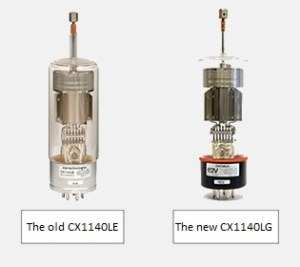
The CX1140LE large glass thyratron is being phased out and replaced by the new CX1140LG which incorporates the following design improvements:

  • The CX1140LE’s arclex and metal base cap will be replaced by a Fortron plastic base cap
  • The hard cement attaching the base cap will be replaced by flexible sealant
  • Electrical specification remains unchanged
  • Outline specification also remains unchanged

More details about new base cap and sealant:

  • Due to a supply chain problem it became necessary to source an alternative base cap
  • Fortron, a high-performance engineering plastic, was identified during extensive trials as a replacement material
  • The old base caps were used in conjunction with adhesive which is becoming difficult to procure
  • A new flexible silicone sealant has already been introduced in our smaller glass thyratrons to replace the hard cement attaching the base cap to the glass body
  • Extensive testing demonstrates that this material retains its flexibility and adhesion during the thyratron’s life
  • Medium thyratrons using the flexible sealant have now been successfully in production for five years and across over 5,000 devices; the sealant improvements have now been proven over time
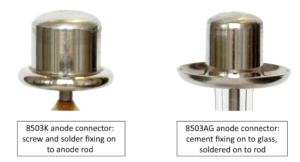
The 8503AG is being phased out and replaced by the new 8503K glass thyratron which incorporates the following design improvements:

  • The cemented anode connector will be replaced by a screw-fixed anode cap
  • This new cap design is screwed and soldered on to the metal anode rod
  • Use of the cement will be discontinued

More details about electrical and outline specifications:

Outline specification changes

  • The seated length of the 8503K will be 194.0 mm (7.638 inches) maximum compared with 168.35 mm (6.628 inches) maximum for the 8503AG
  • In all other respects, the 8503K is identical to the 8503AG

Electrical specification changes

  • The 8503K maximum anode voltage datasheet specification will be 18kV, to correspond to the e2v test specification voltage which has been in use for all 8503 series thyratrons for many years
  • The 8503K heater voltage tolerance is to change from 6.3V +/-7.5% to 6.3V +/-5%. This will bring it into line with most other e2v thyratrons and will ensure the thyratron operates within a narrower range of cathode temperature and gas pressure for optimum performance and life
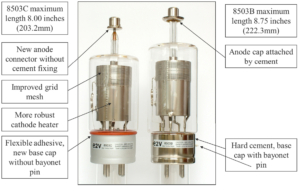
The 8503B is being phased out and replaced by the new 8503C glass thyratron which incorporates the following design improvements:

  • A flexible base cap adhesive to reduce the risk of cracking of the thyratron’s glass envelope
  • The cemented anode connector will be replaced by a screw-fixed anode cap
  • A revised design of grid mesh for improved voltage hold-off reliability
  • A more robust cathode heater

More details about electrical and outline specifications:

Outline specification changes

  • For historical reasons, the plug-in 8503B thyratron and the flange-mounted e2v thyratrons use different lengths of glass body, despite having similar electrical ratings and internal parts
  • The new 8503C thyratron will use the same body as e2v’s flange mounted devices but fitted with a plug-in type base cap, without a bayonet pin, and with an improved anode connector
  • The overall length of the 8503C will be 8.00” (203.2mm) maximum compared with 8.75” (222.3mm) for the 8503B

Electrical specification changes

  • The 8503C maximum anode voltage datasheet specification will be 18kV, to correspond to the e2v test specification voltage which has been in use for all 8503 series thyratrons for many years
  • The change to a more robust cathode heater will require the maximum time jitter specification to increase from 10ns to 15ns. This parameter should not be important in a medical therapy application
  • The 8503C heater voltage tolerance is to change from 6.3V +/-7.5% to 6.3V +/-5%. This will bring it into line with most other e2v thyratrons and will ensure the thyratron operates within a narrower range of cathode temperature and gas pressure for optimum performance and life

More background to the introduction of the new base cap adhesive:

  • The traditional hard cement used to attach the metal base cap to the glass thyratron body can pluck glass particles from the surface during the thermal cycling inevitable in thyratron operation, increasing the risk of cracking of the glass
  • This cement deteriorates (chars) during thyratron life and the base cap could become detached
  • It is used in conjunction with a soft adhesive which is likely to become obsolete in the near future
  • A flexible silicone adhesive has already been introduced on other e2v glass thyratrons to attach the base cap to the glass body

More background to the new base and anode cap

  • The new 8503C base cap design includes an aluminium shell designed for use with the flexible adhesive
  • The bayonet pin fitted in the side of the 8503B base cap is omitted in the 8503C
  • The old hard base cap cement is currently also used to attach the 8503B anode cap
  • This anode cap will be replaced on the 8503C by a cap similar to that used on other e2v thyratrons
  • This new cap design is screwed and soldered on to the metal anode rod